Surely like many of you, I’m part of some groups on themes of personal interest. Every so often I see a post that triggers me.
I might be about to sound quite harsh for some, but as I’m old school AND still hold some of those old views, that won’t stop me 😂
I’m sorry… 30 and still ay mum and dad’s? I would be deeply embarrassed. I mean, even if they pay rent, surely that learning curve has expired by 30… How little ambition do you have to have to just cling on to your parents?
Like my parents I make a point to remind my children how much everything costs and what other things we are unable to have for making those choices. It’s all about transmitting them a sense of responsibility, priority and value.
I know this can be annoying (my father did it often, even though as I got older I realised we were not that poor) but it surely made me want to leave so I didn’t have to put up with his moaning! And I think that’s working the same for my children.
In reality, nothing ever went missing in my life. I had all I needed to grow into a healthy, responsible adult.
Social media brings a lazy success deceit that leads these new generations to believe that anybody can be successful just by posting random online videos. We need to stop normalising this. There is a current viral misguiding of our children into this unlikely profitable fare niente. Not only is this misleading, but it also drives our young ones into this affiliation exploitation. But I diverge.
II always tell my children to ALWAYS have a Plan B. They can still play around online and test the waters, but I want them to be aware that it is a very volatile world. What is true today can become a lie tomorrow. And unfortunately, the virtual world is starting to overflow to the real one at several levels. But that’s a view for another post 😏
Always plan for the event to go wrong. Always have a job you can fall back on. And the better the job, the higher the chances to maintain whatever life style you are looking to achieve with Plan A.
What better (brighter) season in the year will enable us to see things at their clearest? Being a little OCD, I consider it quite a satisfying task 😁
Going through this relatively new phase of my female life made me re-evaluate it. Menopause (and I guess andropause too) is that stage where we’re given the chance to revisit our memories (yes, also to exercise our brain), to review and reset our current position.
Let’s see… COVID, perimenopause, teenage daughter through a mental health ordeal, work redundancy, now teenager son going through an ordeal of his own to fit in with his crowd (absences, detentions, suspensions… ), the imminence of a World War, global warming and all sorts of natural catastrophes happening where they are least expected…
In nearby circles, someone we know has been given a shorter life expectancy, a friend’s mom just passed away… I’m just not ready for any of it yet. Grateful that we are all still alive and well 🙏🙏 and that we are not celebrities (an absolutely PRICELESS gift!)
On these notes, this will be the order of works:
A full download of all my information on Facebook since I have the account
Deleting any photos or videos of my children
Tightening my privacy group: deleting, unfriending and unfollowing (just not completely deleting the account because I still get some useful and interesting information on my wall, which I might otherwise not get. Social media for me is no longer about connecting with people, it is about noziness and gossip.)
Making my IG profile Private
Financial investment from now on will only be in myself (health and interests). It is the only worthwhile investment. I’d rather invest in my health NOW than save up for an “unhealthy” day. Money will only make a difference if sensibly applied. And we all know that if our health gets seriously affected, money does very little, if anything at all.
Allocate more time for myself to do things I enjoy (I want to go back into reading, going out more, travelling, etc).
I am keeping Facebook and IG for my blogging and rant shares only, practically ignoring my LinkedIN (no need, no time and very little interest).
Prioritising myself is a MUST. I don’t have the time or the patience for mindless doom-scrolling nor do I identify with the current mainstream no fun hysterical-dumb-influencers-cancel-little-minded culture.
Menopause is a wake-up call for me: time to slow down and to enjoy what time I’ve got left.
“Menopause is not an ending; it’s a powerful new beginning.”
I believe I started my perimenopause about 4 years ago. I was 44. The brain fog was my trigger. It became more present as days went by. I realised it when I started forgetting things I had no problem recalling before.
Brain fog (yes) – but this could also be attributed to my busy schedule allied to my evening vinomania (I do like my red wine). I just have to include reading into my newfound ME time – which I will be sharing with you -.
The odd night sweat (yes) – which for me is PERFECT, since I’m an Iberian woman living in a Northern European country (it does make withstanding the cold winters much better).
Some difficulty keeping weight down (yes) – but I try and stick to the 80/20 ratio: if I’m good 80% of the time I can be naugthy the other 20%. We’ve got to live a little…
The sex is not as regular (yes) but it is better as ever… 😍 We lead busy lives (around full-time work, kids and little house projects) so it is hard to find the energy… We also found that when we have both time and money planning dinner dates and weekends ahead away helps with it all. It works really well, if we’re both looking forward to it, the build-up to it, a bit like a pre-foreplay if you will.
Let’s stop this idea that menopause is a taboo topic, or that it is that bad. Because it isn’t. Let’s embrace our nature, girls
The 1990s were a defining era for Generation X, packed with trends that shaped their identity. Here’s a look at the top five trends that my generation loved during that transformative decade:
1. Grunge Music and Fashion
The 1990s witnessed the rise of grunge, a cultural movement rooted in the alternative rock scene of Seattle. Bands like Nirvana, Pearl Jam, and Soundgarden became the soundtrack of Gen X’s formative years. Alongside the music, grunge-inspired a distinct fashion trend characterized by flannel shirts, ripped jeans, and Doc Martens boots. This anti-establishment aesthetic resonated with Gen X’s ethos of rejecting traditional norms and embracing individuality.
2. Iconic TV Shows
Television became a major cultural touchstone, with shows like Friends, The X-Files, and Seinfeld dominating screens and conversations. These series reflected the humour, relationships, and uncertainties of adulthood, making them relatable to Gen Xers navigating their own coming-of-age journeys. MTV also played a pivotal role with shows like Beavis and Butt-Head and The Real World, blending music, humour, and reality to create a unique connection with viewers.
3. The Tech Revolution
The ‘90s marked the beginning of the digital age, and we were at the forefront of adopting new technologies. Personal computers, AOL instant messaging, and the first mobile phones became symbols of the decade. Video gaming also soared in popularity with systems like the Sega Genesis, Super Nintendo, and the groundbreaking Sony PlayStation. This era laid the groundwork for Gen X’s affinity for tech-savvy lifestyles.
4. Alternative Movies and Indie Films
Hollywood’s landscape shifted this decade, with indie films gaining prominence. Quentin Tarantino (Pulp Fiction), Richard Linklater (Dazed and Confused), and Kevin Smith (Clerks) created movies that spoke to Gen X’s unique sensibilities. Themes of disillusionment, wit, and rebellion struck a chord, while blockbuster hits like Titanic and The Matrix captivated mainstream audiences.
5. Retro and DIY Culture
Gen X had a strong nostalgic streak even in the ‘90s, reviving retro styles and embracing a DIY ethic. Vintage band T-shirts, mix tapes, thrift shopping, and garage bands were expressions of this trend. The skateboarding culture flourished with brands like Vans and Thrasher, reflecting the generation’s preference for authentic, grassroots movements over corporate homogenization.
A Lasting Impact
These trends weren’t just fleeting fads—they defined a generation and influenced the broader cultural landscape. Grunge music and fashion reshaped the music industry and retail markets. Iconic TV shows became timeless classics. The technological innovations of the decade paved the way for the modern digital world. Indie films showed the power of storytelling outside of Hollywood’s formula, and retro culture inspired the wave of nostalgia still prevalent today.
For Gen X, the ‘90s weren’t just a decade—they were a lifestyle. The trends we embraced continue to echo in today’s fashion, entertainment, and tech industries, proving their enduring impact on popular culture.
Things happen for a reason. It’s funny how we tend to put pressure on ourselves to be high achievers, when we’re doing just fine, compared to the new generation.
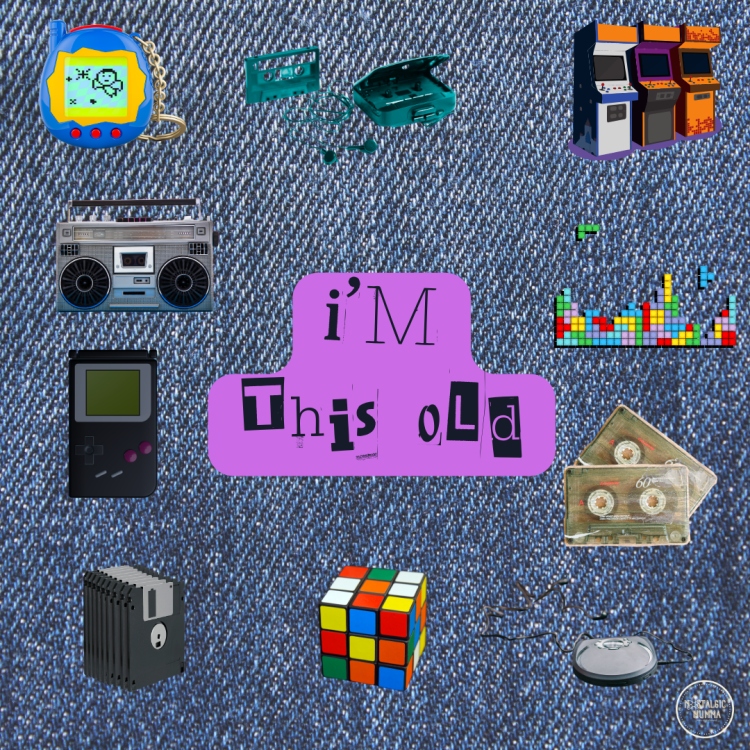
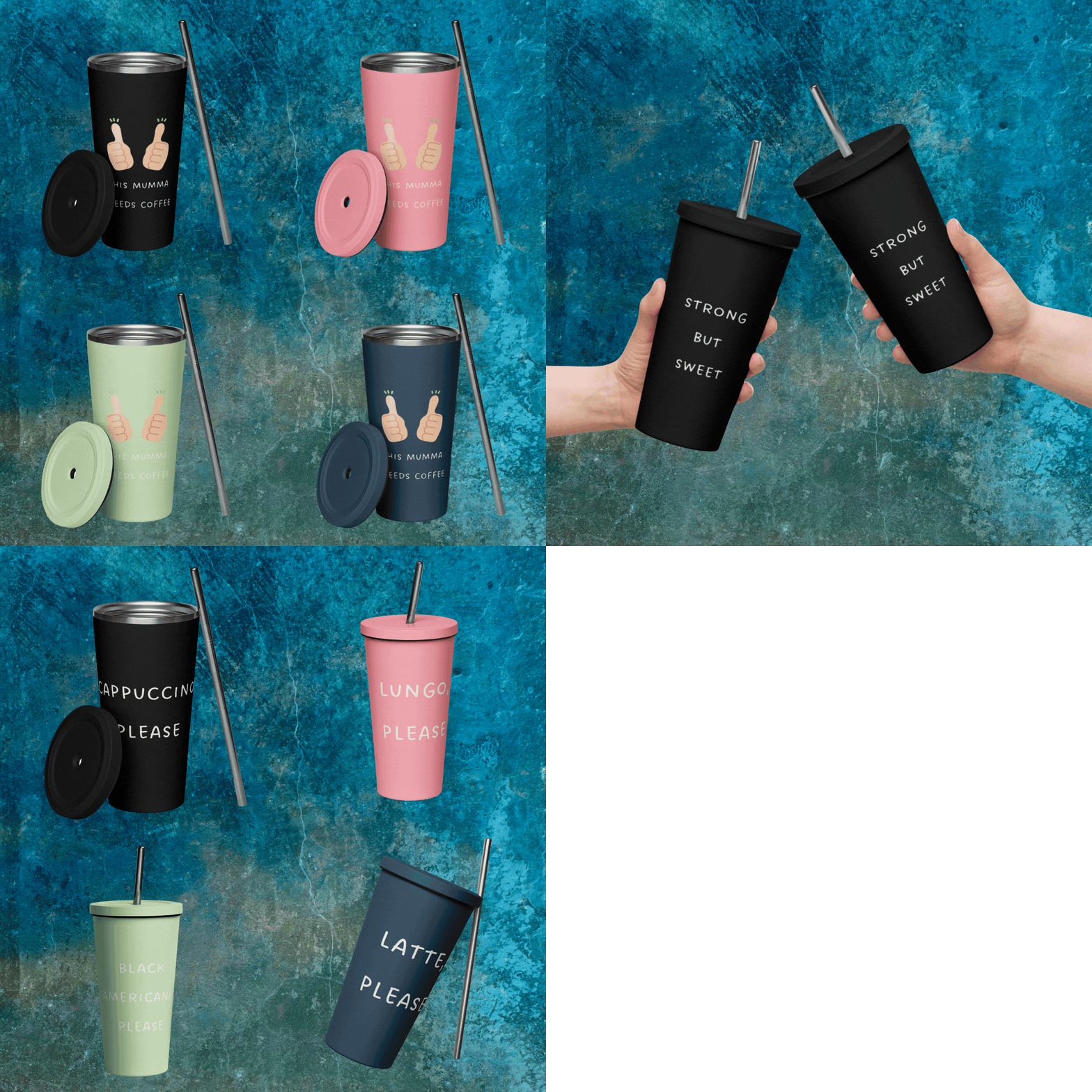
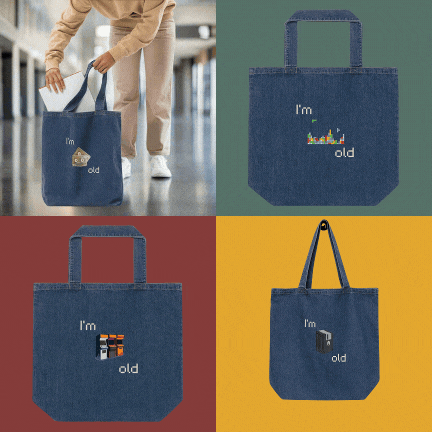
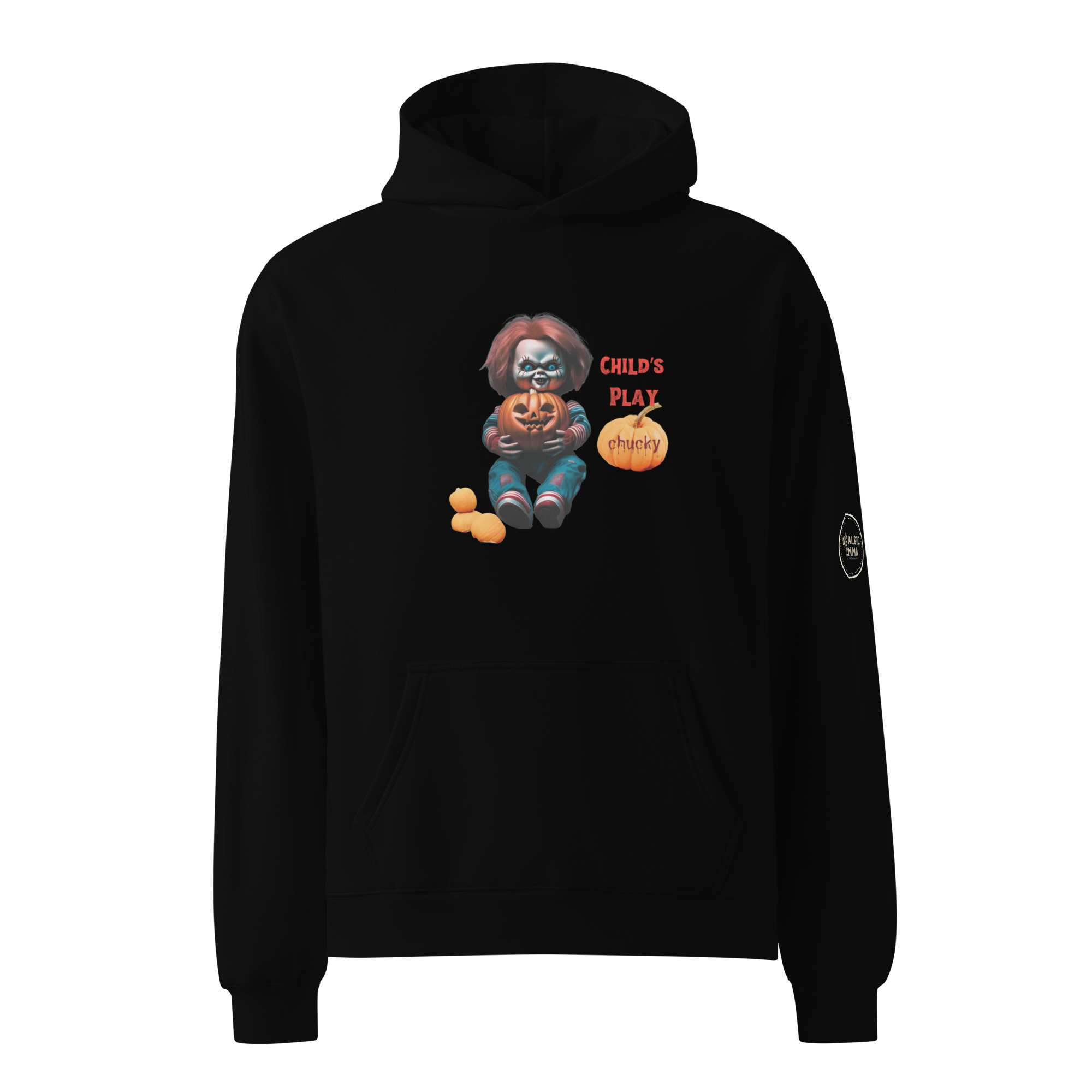
A year ago I started a tee and mug online business on Shopify. I decided to give it a go. My theme was nostalgic key references (ie 80s and 90s tech, music, movies, etc). And although it had some traction, it didn’t have enough for me to continue so I decided to shut it down.
I felt imprisoned to a sales job that was meant to be just a hobby. The pressure of 1) finding time 2) finding headspace and creativity 3) financial burden vs little to no sales I was getting made my decision an easy one. I still work full-time. I am still a mother (and housewife). A creative job is not one you do well under pressure.
I enjoyed the creative side of things, but I could not afford the time or money. We pay for a domain, to verify the business, for APIs to work out the POD for us and all we needed to do was to post engaging content and wait for the results. A marketing and SEO strategies were needed. Who the hell knows the perfect strategy? Knowing when to post as it’s when people will be more likely to see it. Paying someone to adjust our business SEO settings so that it ranks when people Google our products. Then if we pay that little extra, our products are in effect “force-fed” to the audience that is more likely to buy our products… And all this costs money. Money I could be using else where (towards our house works, holidays, dinners out…)
The way I see it, the more businesses act on this premise the less likelyhood they are to rank up. It’s the race of the highest bidder. Just too much stress. I want to enjoy living. That’s all very well and good for big businesses that can afford to increase their bidding. I’m off that race.
Also, in my mind, a pool of followers that is organic is much more likely to gain traction, AND to buy from us. I am against purchasing contact lists, and forcing people to look at products if these are not looking for them. Personally, it has also been a big bug bear of mine to deal with pushy sales. “If I want your help, I will reach out”.
And I do believe my products had a market. A nostalgic, retro market, which is now at its peak. like fashion, culture is cyclic. It goes around and comes back around.
Maybe in a couple of years time, once things settle a little (Charlotte goes to Uni, Cedric’s over the teen years) my outlook on a business venture is more laid back. They still need me. A lot. And both, me and my partner want to make the point of being there for them. I refuse to be part of the statistics linked to mental health problems, or for my children to be one more adult that is scared to be part of the working force or to go out in the world because of what the mass media wants to push us to believe. I want them to be able to see through the fake news, the fake high lifestyle many influencers portray to be easy to achieve, whilst that life is being funded by their dumb, blind followers.
I don’t want them to take part in the wrong mob following, where they would remain silent when coming across injustices. I want them to follow inspiring, righteous and kind type of influencers, even if they don’t have a social media account.
Running a small business in our current world is a mission. Social media plays a big part in it (at least at the moment). I expect it to mutate in some way, as AI infiltrates it. Then the human input will be so little that we’ll have to find other ways to connect in a more personal way. And this is what I was looking for. But the social media world is hard to unfilter. The ones you see succeeding are either already celebs (or make fun of celebs), post noisy and bright content, practise affiliate marketing, or that post controversial content. Well, I don’t want to be part of any of those.
Now I will be posting as a simple blogger. Where I used to publish as Witty Freelancer, I am now Nostalgic Mumma, showing my views from a nearly half-a-century point of view. GenXer all the way, undeniably. Too old not to be proud of that, after all I’ve been assisting, and “Cancel Culture” is not in my vocabulary. Back to the whiteboard.
“Companies need to nurture their employee’s individual nature for them to feel confident in their role, as it will empower them, hence making them more productive. It works from the inside out.”
Remote Work
In case you missed it…
It has been a while since I scanned through the world of remote/hybrid working, so I’m going to play a little catch-up. Going through the top ones since January was not an easy task. But it gave me a good insight into the remote work trends, and it put it into perspective for me.
Shocking (or not) that someone like Elon Musk, who is in an advantageous position to substantially improve remote working through tech applications has declared to be against it and found it “morally wrong” based on this work format not being available to those more hand-skilled workers. His comments should in fact cause hand-skilled workers indignation, for his clear lack of will to make this format possible for them too. The public comments are quite funny and can often offer added insight to the news articles.
But on to more important things, we are now well aware that remote work is intrinsically related to the growingly trendy mental health topic. It’s about how working from home can be damaging to one’s mental wellbeing. It’s said to bring feelings of isolation, which can lead to an inability to adapt, hindering professional progress. Moreover, when staff is confronted (even forced) to work with such a required high level of independence when it was mostly used to working interactively (and/or relying on others), this can threaten their employment.
This can trigger a sequence of unwanted events: stressing about work, which leads to stress about the job position’s relevance when not achieving or delivering. This will be followed by concerns on how to pay the ever-growing bills cost in the current recession. On the other hand we observe the fear of the temporary loss of turnover from employers, that may come as a result of the required allocated time to workshops and training related to mental health, in an already dreaded remote setting. But the revenue that taking this action brings, in the medium term, could attract, will surely overcome it.
In certain cases, there almost seems to be an avoidance, where some employers hope that if they ignore a problem for long enough it will just go away. But they’re happy to assume their workers are just being lazy when they’re not being as productive as expected, without actually offering any solution. There is no benefit for either employees or employers to not have this support in place. With the information and technology currently available, and with access to all information worldwide and in such depth, the unawareness excuse has become unacceptable.
Although companies are not yet at the ideal mental health empathetic level they could be, their awareness of the matter is growing. This is a very positive shift for all corporate work environments. The same applies to fully remote workers, whether working from the comfort of their home or from the comfort of a nice hotel in some remote paradisiac island. Here’s an article with tips to help nomad freelancers manage their work and life balance whilst still preserving their mental health.
Remote/hybrid work can benefit individuals And if it benefits individuals, it benefits businesses. I can however understand that it doesn’t work for everyone. Either because the work requires it to be office-based, because the individual is not comfortable with working remotely or simply because the required conditions to work from home are not fully met (ie. children and pets, cared ones). This should be a conversation to be had with the employer on a case-by-case basis. It may sound like a time-consuming task but if there are guidelines in place, in partnership with the HR and other relevant Departments this could bring a whole new world of possibilities. What measures is the company willing to put in place to allow this freedom of choice? Perhaps a workshop that covers all areas is in order: mental wellbeing, technology refreshers, expected SLA’s and KPI’s overview, productivity, etc. And acknowledgement: verbally recognising that the employees are also willing to put effort into this will help them not to be left feeling ignored. This is an article from last year, from a company I follow, but I related to the view 100%.
I wouldn’t mind guessing that the people who tend to be more socially active in a physical setting become awkwardly shy in their virtual engagement and the more conservative ones may see remote working as an opportunity to showcase their talents. Companies need to nurture their employee’s individual nature for them to feel confident in their role, as it will empower them, hence making them more productive. It works from the inside out.
What about the extended benefits that remote work brings the business, the higher engagement with other teams, located across the globe? The potential, the opportunity of a wider inclusion and connection with extended teams, how can physical work offer that? Invest in the people and the people will bring business.
My view of remote work sits in the middle. I find hybrid work offers a very reasonable work-life balance for me, for the time being. I like the idea of getting a good amount of autonomy in my work without damage to the physical interaction that the job requires, whilst maintaining a good level of control over my home life. I’m not surprised that many will be willing to take a pay cut or look for another job that grants that freedom if working from home allows a better grip over their life as a whole. And that’s what the Great Resignation was all about.
As a huge defender of hybrid work for corporate jobs, I truly find it the best of both worlds. I have mentioned this in my latest #goals post as well. I disagree with the overlooking or the persistent denial of the productivity potential that it brings to our existence. I strongly feel that much of this has to do with remote/hybrid working. The autonomy it grants us make such a difference in our work-life balance.
Commuting feels like such a waste of time (and money) looking back now. To top that up, my productivity exponentially increased. And alongside the work productivity, is none other than the home life productivity. I have lost count of how many washing loads I have got through, how many lunch packs I prepared, during my commuting time and how many clothes I’ve ironed over my lunch break, which has granted me that much-needed/deserved extra time during the weekend. Quality family time! Quality WRITING time!
Working towards that 100% balance between life and work, where ideally the balance should, in fact, lean more towards LIFE, where the scale weighs 100% work no longer represents a necessary “evil” for the purpose of sustenance (and those life crutches, creature comforts, whatever you want to call it). What we want to achieve is the Minimax principle where we get the maximum of enjoyment or wealth with the minimum effort or pain. The best minus the worse, does that make sense?
On this note, as I love travelling so much and agree wholeheartedly with this article, simple, well articulated and very positive, it is important to cultivate the things that keep us sane and joyful. At least until our social and financial systems reach that peak where work and pleasure intertwine in a such seamless way, that you can’t tell you are working. “Now that’s the way (huh-huh) I like it!“ (Emphasis on the quoting before someone sues me for infringing copyright laws.
It is true. I take regular phone calls as an advisor and not only I can tell the caller’s predisposition when they call (i.e. if they’re in a good or moaning mood) but I can also tell the effect my attitude on the phone has in their reaction. I can easily tell that both my posture and attitude have an impact on the reaction of the person at the other end of the phone. We would be being too narrow-minded to think the power of suggestion is only verbal when it can also be transmitted through our non-visible body language.
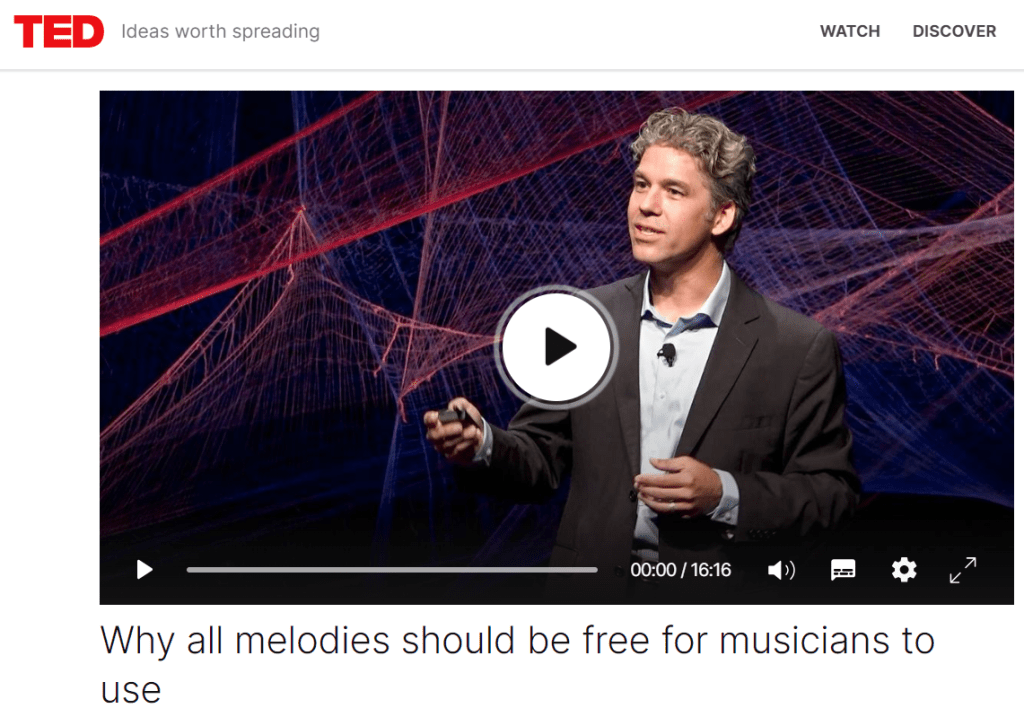
On TED: Copyright or appropriation
Another great TED talk, by Damien Riehl. Very worth reading. In this day and age, drowned with commercial capitalism, our society is being constantly moulded to suit a specific purpose. It has been consumed by quick money fixes and, by this talk, some resort to more desperate means to achieve a bit of cash. Damien actually makes a very valid point. Have you ever thought that music is actually maths-based? It is based on algorithms meaning that, in reality, all music harmonic (and disharmonic) combinations are limited.
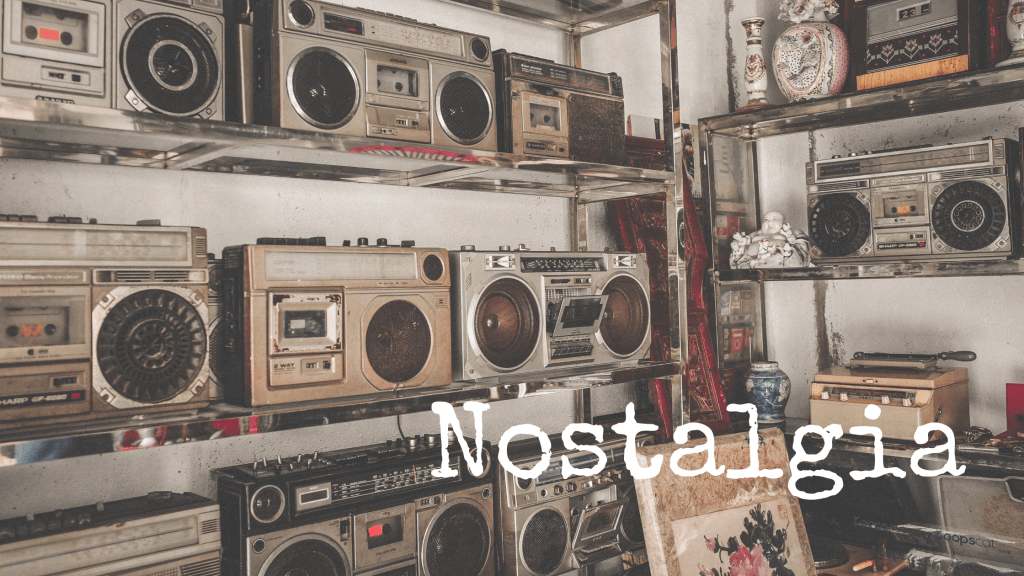
Thinking with Google UK: The current nostalgia trends
It is so refreshing to see the brands I grew up with making a return. It is inspiring and a great way to create bonds with the new generation, by only revisiting these brands and remember what they meant for us. Where our favourite branded t-shirts were offered to attract more consumers, or as a prize for our regular buys, collecting points of a sort, nowadays this retro fandom has brought a new way to bring new business to old businesses. Now nostalgia has made a comeback on all areas, clothing, music, hairstyle, you name it. To be fair, is only human to want to partake of the atmosphere of the best decades to have ever existed :)
Mind promenade
This blogletter is a work in progress. I am looking for that balance between my availability, my interests. and the reviewing and formatting (when Grammarly doesn’t betray me…).
Life gets very busy very fast and often for long periods. We see life passing us by and our goals still unmet and, obviously we question ourselves. “Oh happiness, goals, personal satisfaction, where are thee?”
A writer’s journey is not one with a deadline, yet that’s what they are loyal to. The writer’s journey is more about themselves than it is to complete the writing task. If they follow their true writing path, they’ll find they’re only trying to understand themselves, continuously looking for a spark.
For someone that leads a busy life, no reading or research feels enough to achieve the goal. It always seems like everything has already been written, all possibilities explored. We live in a world where people’s attention span is getting shorter, where they are more likely to focus on short, noisy, flashy content, such as the hysterical videos my kids sometimes watch. There is no substance to them. 9 out of 10 posts are not true, are not helpful and can have a negative impact on the viewers’ mental well-being. I don’t know when this new generation started valuing superficiality. It is not even entertaining.
For me, reading is a luxury that relies on time. My reading at the moment is mostly limited to practical guidance and self-help. I struggle to set it as a high priority because most days life consumes my energy with mundane but still necessary tasks. “Set time aside for yourself”, they say, “we all need some ME time”. But where do I draw the line between ME time and LIFE time?
And then there’s the social media pressure. If you can’t win them, join them, right? If we don’t engage we’re seen as anti-social. Today there’s no social interaction that doesn’t include a phone. Even if you meet friends for dinner, if they’re not constantly referring to it to post pics or to respond to comments, they’ll get it out just to share gossip or a funny post or video. We end up all getting our phones out because everyone seems to find it more interesting than the physical act of social interaction. It is truly a sad state of affairs… But I diverge.
I still haven’t given up my quest to read more, to write more. Reading is like decoding a secret message, it’s not just reading for reading, it’s about reading between the lines, it’s about my interpretation of what I’m reading. Well, it also depends on what I’m reading, of course. The truth is when you commit to doing it, that spark returns, without you even realising it. All of a sudden there is a little hope that maybe what I’m writing might have some significance, resonate with someone or even entertain. But the most fun part of writing is the game of putting words together with an intention, a meaning. Playing with words can be so interesting, especially if you are working on a topic that you are curious about. I had forgotten that even researching can be fun.
A couple of weeks ago, following submitting a piece of writing to a freelance writing platform, I was invited to complete a trial order. So I set myself the task to spend some time at the local library so that I could focus on research in a more effective way than I would have done, had I stayed home. It would just not be possible. Children and teenagers are demanding little buggers. If one part of me loves them to bits, the other wishes that they grow and move on to more independent lives, and so I can resume mine.
I sometimes find myself getting too stressed about work. The corporate world can be harsh and doesn’t truly empathise with our personal life. Managers keep pushing us to achieve goals and to progress in our careers, but the way that they do it leaves us feeling like if we don’t present objectives we run the risk to become obsoletes.
What is wrong with us just being good on what we’re doing? Maybe we’re just not prepared to move on at a given moment, maybe our true career objectives don’t match the opportunities we’re offered, maybe we’ll be better off drawing our own path?
Lunch break n the office grounds
I’m happy with the job I’ve got at the moment and to stay where I am right now, when I’ve got personal matters to resolve that require my focus and because of that I’n not in a position to be facing new challenges. Is that so wrong? My multitasking skills are limited to a certain area, if tasks differ too much I will burn out, and I really can’t afford to. The job I’ve got provides me with financial stability, doing a good job (in a near autopilot mode), offers good perks (a good team spirit, a good location, hybrid work) whilst allowing me to place my focus in other areas of interest. One of the work-balance premises is certainly self-preservation, wouldn’t you say
“It is important to clearly detach from all other similar forms of advertising”
Mind promenade
It’s been a while. This last month, for the first time (luckily after three jabs) I caught Covid. I hoped I could be one of those rare cases of immunity, special enough to remain untouched. The kids had both had it. But it wasn’t until my partner caught it that I got it passed on. With everything that is going on, it’s impossible to dodge it. We have come down all the way, from the beginning of 2020, through the sensible way of prevention as far as we could. How long can we possibly postpone it? We live together, we sleep on the same bed, it was bound to happen. So obviously, this has put our progress with the house works on hold.
My main symptoms of Covid have been lethargy and a VERY persistent cough. I started my Covid still well enough to keep work (remotely, of course). I was already working from home, due to my partner having tested positive. A couple of days later, I had this out-of-the-blue dry cough and started feeling the typical cold and flu shivers, so decided to test. And there it was, that second bold stripe as if it was a pregnancy test.
Of course, I was still feeling ok to work, after all, the type of work I do isn’t physically demanding, so I pushed it. I asked to stay out of the phone queues, so I wasn’t forced to speak, as it would trigger it. But the cough quickly got more persistent and by lunchtime, I didn’t even need to speak to cough, just breathing would do it. So I called it quit for the day. Yes, I surrendered. Sometimes we just have to stop completely, have a lie-down, and literally force ourselves to recover.
For the next 8 hours, between toilet visits and healthy snacks, coughing was all I did. Our bedroom was full of at least 3 types of cough syrups and lozenges, and none of them seemed to be relieving my cough. The little I could smell, through my partially blocked airways, was the smell of a hospital room. A mix of medicine and disease. The coughing got me so tired that my body finally gave in to sleep.
The following day my body felt like it had been beaten with a stick. I was feeling drained, and sore from my throat to my lower back. My diaphragm felt like I had submitted it to 300 abs without a warm-up. On the third day of recovery, I felt that lack in the sense of smell and taste. Don’t get me wrong, I still had an appetite. I had a ringing in my ears but I feel like the worst has now passed. First priority: opening the windows and a big load of washing to bring the sterilised feel back in.
Remote Work
In case you missed it…
Whilst scanning for articles that explore the pros and cons of remote work, I thought it would be fun (and even logical) to through other topics into the mix. Although the topics are not all directly related to remote working, they are of interest to most people as they resonate with us all. And because I tend to read about it, I get more feeds and it then prompts me to write my view on it too—another form of purging my thoughts.
One of the articles I found – about doom-scrolling – was on LinkedIn. Mind you, I don’t spend an awfully long time on LinkedIn because I find it boring. I understand the reason for its existence – networking and all that – but I don’t really identify with its organics. I go there, probably once a day, to check the Daily Rundown, and other news bots I follow. I find LinkedIn is like a second version of Facebook, only there people brag about their jobs instead of their holidays.
Remaining Sane
Doomscrolling
The Psychology of Your Scrolling Addiction, on Harvard Business Review
How do we get sucked onto a continuous, mind-numbing, video (and stories) stream for hours and hours on end? This brings memories of the old movie Poltergeist. I’m pretty sure that if a new version was made, the phenomena would kick start from a smartphone, and the consequences would be far more devastating and scary. This article covers research on the rabbit hole of the bite-size content binging urge, once you start. Again, the way I see it, it’s only about disciplining ourselves by scheduling times to do these things, to not lose control over what someone is sharing with us. We set the emergency and our priorities so, unless it’s someone in a real-life danger and I receive that video, it’s not getting watched until I find the time for it. It goes straight into the “Watch Later” category.
Common wellbeing sense
Future of Work, on Forbes
To keep the remote working side of things possible, it needs to be recognised that mental health has become a major part to make the life-work balance work effectively. Loneliness, isolation, stress and social anxiety build-up is a reality. There is no point in forcing this dynamic if the team leaders are not willing to acknowledge that our mental health being is essential for our work to be completed effectively. In the same way, as our computers need an update every so often, or a tool we use reached the end of its life cycle, our brains are our most important tool. It is the only tool that is used ALL of the time, the one that never gets to switch off (even when we’re sleeping). I’m no expert on this matter, but it seems pretty simple to me. And leaders that are not willing to accept time off for this reason – or even to proactively arrange for regular well being sessions (whether these are meditation, yoga, or Zumba, it doesn’t matter) that will help bring their team members down to earth and stay in sync with their environment – do not have leading material. This is crucial. Then there is the opposite side of the coin, where being forced to return to work from the office is causing people to quit their jobs because they are now starting to feel like they can no longer cope. After getting used to a more flexible work approach induced by the pandemic, they now feel like it is too much having to go back to commuting, full-time office work and all the stresses that come with it.
Teamwork makes the dream work. Or not…?
An interesting approach to how the team members feel about each other and the work they think they are doing (or skipping) whilst working remotely. It is true that we can’t see what the others are doing, but I feel it comes down to the level of transparency, cooperation and trust in the team and how these are maintained by the leadership. Leaders need to be creative when finding ways to do this without micromanaging. KPIs are there to show all levels of productivity and we all need to be grown-ups to stand by ourselves.
Motivational Landscape
In Ideal Home
It surely comes as no shock that our surroundings can play a part in our productivity. Remote work doesn’t have to be necessarily just working from a cupboard to make ends meet. It should be, let me reword that, IT MUST BE enjoyable.
Lighten it up, bringing some creative workspace (and tools) ideas that could positively contribute to improving our WFH. Because if working from home is pleasurable then our work will be done better (and faster). I’m sure you agree with me here. Finding any little tools that can help us complete our daily tasks can make a lot of difference. And obviously have a huge impact on our mental health (motivation is soooo important!).
Minding my business
(Click the images to learn more)
If I mind yours…
and you run a charity…
Running a charity must be a hard job. It relies a lot on people’s empathy and generosity. It is ultimately teamwork. Trying to reach out to people in a world where networking is virtual, where there is no actual human contact, in an environment where people use “Likes” and hearts to show empathy without commitment feels like an impossible task. Learn more
“… we cannot rely on AI to do anything for us in any tasks that require common sense, judgement and creativity.”
Mind promenade
Comparison, comparison and more comparison. It is ongoing. It doesn’t matter where we are or what we’re doing, every individual insists on gauging his successes by other people’s. We tend to forget that we all have totally different experiences and paths. We will all have different outcomes.
Again, the busier our surroundings get – whether it’s in traffic, at work or on social media – the more of that white noise we allow in, the more it will affect us. We know it’s easier said than done. It’s easy to say it aloud, not so easy to interiorize it.
It’s important to have a positive supporting network of people that nurture our potential, and that identify and welcome our skills.
The way I see it being a successful (copy) writer is about hitting the nerve. It’s about being brave and knowing how to use words the right way to state the obvious, to be bold and clear to say what everybody thinks. This creates resonation. And from resonation comes attachment: “Well, here’s someone that calls things by their names.” Common attracts. All working niches must be common. They must be an intersection of things people relate to, common things but not in the sense of the regular common, common for a particular group of people.
Remote work – In case you missed it…
Remote/hybrid work is increasingly gaining more and more support from both employers and employees. As time passes, we are starting to see a wider acceptance and stronger trust in the systems in place. We have to come to terms that it is a more affordable way of working for everyone and it should be promoted as a company perk, for computer-based roles. Especially if an employer wants to avoid/postpone salary increases for a couple of years. The fact that an employer is willing to acknowledge the importance of the work-life balance AND promote mental well-being alongside it can be recruiting game-changing.
I had an interesting experience last week when I was “forced” to choose a video banking appointment as opposed to an in-person one. Let’s face it, when it comes to our money, we prefer to speak to someone physically. But it’s all part of adapting to this new remote working world, and to be fair, in an era where we are using contactless cards and phones to pay for things (either by storing our bank details or by scanning) having a physical appointment at our local branch is no longer a need.
Considering that the next available appointment was only in two months’ time, it made practical sense to just sit in a video banking queue, where I get an appointment on the same day. And it was quite a positive experience, I must add. Nowadays, we have the technology to make it work. There are platforms to allow people to be verified and even sign electronic contracts. It should be the same to be seen by a doctor. Not only do we save time and fuel, but the entity is also more productive. We already “sign” contracts, we just see it as a means to an end, and we normally don’t read it all the way through. We just tick that we did.
There are still industries where this type of work will never be applicable, at least until such point when AI takes over. Construction, manufacturing, maintenance and reactive type of jobs still require working in the field. And more than ever those jobs should level up in pay rates and working conditions so that we still see a good part of the population sees them as jobs worth applying for. It will probably be important to review the current academic system to convert it into one that makes choosing these roles both personally and financially rewarding, rather than incentivizing the coming generations to study for a more “cushy” job.
Here’s my selection of articles on remote work from the past few weeks. How is remote work evolving and what are the most pressing concerns. As remote work spreads across the globe, so does the risk of security of the personal information companies manage. It is important to review policies and adapt and put measures in place that are compliant with individual privacy. Should rates vary or not depending on the worker’s geographical location? The way I see it, the workers’ location shouldn’t even be part of this equation. Another article on the subtle mistrust in remote work. Again, do we not know what we are all doing, when working from home? Companies set SLAs and KPIs. It should be easy to measure if the work we’re doing is of benefit to the company. Nothing a spreadsheet won’t resolve.
It can be scary to look for a job. It can be even scarier if you’re looking for your first job. Do you remember when you had to put together your first CV? Read more
“A virtual print proves your existence, shows who you are, what services you provide”
Mind promenade
A week late. It has been hectic: overtime, partner away for a couple of days and daughter slipped with school attendance again… You know, life.
Progressing
Contracts. Work commitment. What can they do for both the client and the freelancer? They protect. They help prevent potential disputes.
We want to be prepared. We want to make sure we are on the same page as the client concerning the rate, the time we are offering and the availability. The client will also want to ensure he gets value for his money: results. Results that ideally translate into new and strong leads.
A contract helps preserve diplomacy in the working relationship, it’s an agreement that both can refer to when something is not quite right. A verbal agreement is easy to dodge when things go wrong. As much good faith, we may want to put on the other party, the contract ensures the good health of the business relationship.
Regressing
To a time when war was simple. Only joking. I don’t think there was ever such a time. As humankind evolved, relationships just got more and more complicated, a very real game of thrones. All in the name of money and power.
When any likely war seemed to point in the way of a virtual or bioweapon, we are currently on the brink of a nuclear one. Clearly, humankind does not learn the wise easy way.
Remote work – In case you missed it…
Some interesting reads this week. And one I missed last week, that popped up on my Chrome Newsfeed. The article I missed was the one about the 10 best places to work remotely. I couldn’t feel prouder but all are good choices, all for the best reasons.
Responsibility and communication go hand-in-hand and are key to making remote work possible and productive. Read about “Solving the hybrid paradox” in the Canadian Financial Post. I can’t argue against the savings remote working brought to my petrol bill, but I find hybrid holds the balance between the savings and the social connections essentials. The Insider says it’s no longer about the virus, people have just grown accustomed to working remotely, even though the best employee may be the one in “sweat pants”.
But my article of choice was one that showed up on my LinkedIn Daily Rundown. This one article is about a job interview by a chatbot. I like to think I am a progressive thinker in what relates to the human-AI partnership, but I’m not convinced this concept will have legs. we can’t deny there is a benefit for AI to screen keywords, years of experience, education, etc. But there are too many variables when it comes to a face-to-face interview. I wouldn’t rely on AI to make a character judgement. Plus, once someone cracks the algorithms that’s a door open to whomever, qualified or YouTube “trained”…
Another interesting article from Benjamin Laker, on Forbes, focuses on the way remote work may be letting our younger generations down when they are starting their employment journey out. He speaks of the need for “handholding” and how the lack of trust by today’s senior management is preventing them from adapting to the new remote work/hybrid culture, particularly from their onboarding. The way I see it this is not happening just to the youngsters, this is happening to anyone who is starting a new job, following a redundancy, taking a new leap onto a new career. Anyone starting now will be feeling daunted by this new normality. Equally, anyone taking in new staff will be mistrusting at the start, until they get to know them.
There are productivity measurement platforms out there nowadays, there is no excuse for mistrust over employees working remotely. However, remote work (whatever shape it takes) should not replace or block physical social interaction. It is important to have one or two days a week where you re-group and ground the team down. This is why I find hybrid is a much healthier way to work. We need that social interaction and no Teams can replace that. In my opinion, the success of remote (or hybrid) work relies on people’s ability to be responsible adults, the same way as they are expected to be when it comes to protecting themselves and others during this whole pandemic. We are all grownups and are expected to act as such.
Minding my business
(Click the images to learn more)
#life
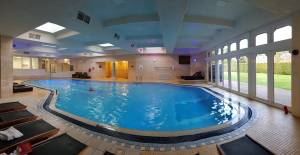
A SPA on the horizon
Since January, I have volunteered to work an average of 10 hours overtime a week more. This may not sound much, but when we’re talking totals of around 45 hybrid hours/week, still looking after the house and the kids (this last one has been overwhelmingly hard)… I am shattered. I need a quality day off.
#Family
Where did I fail as a parent?
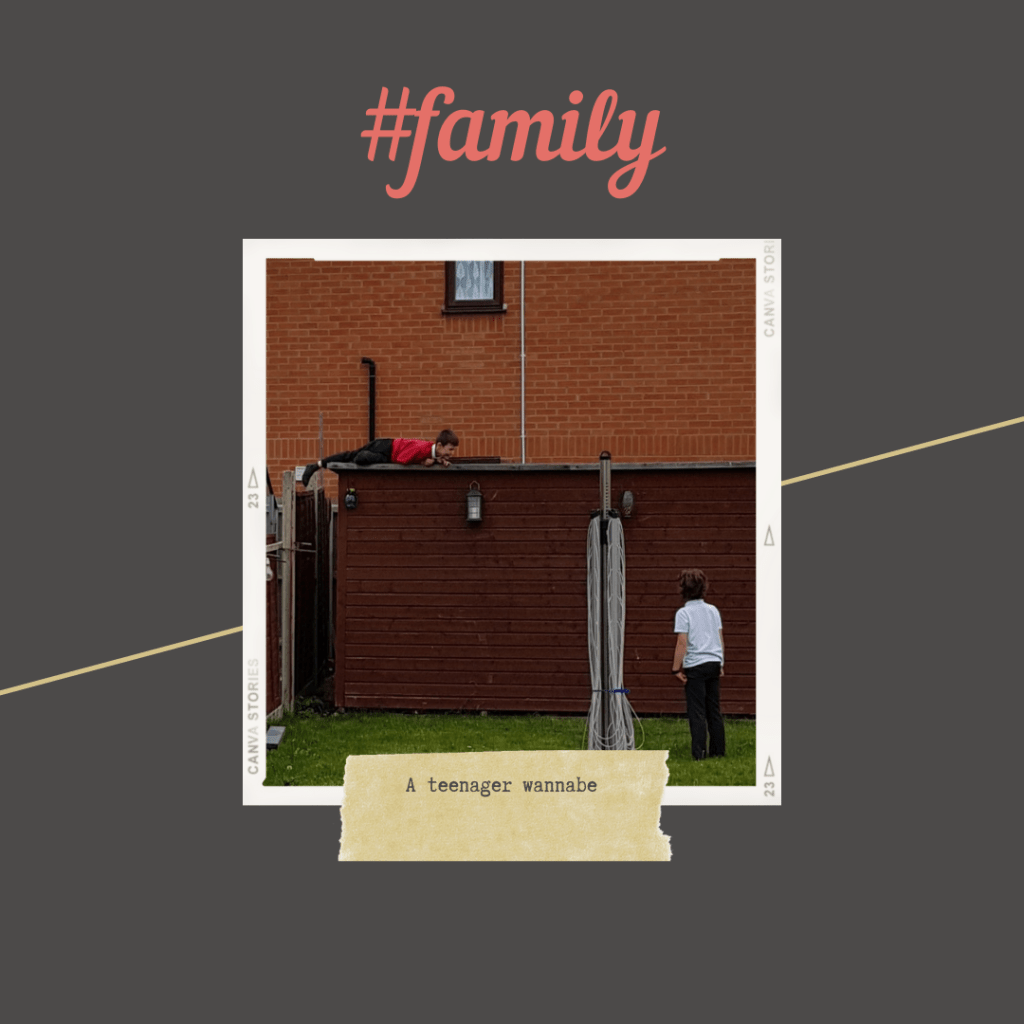
Two whole weeks and two days of consecutive full-time attendance and she decided to take the rest of the week off school. How do we talk a teenager into what’s in their best interest? Even the side treats to keep her going don’t seem to have convinced her. I have tried to remain reasonable, giving her the benefit of the doubt countless times. She says she hates school. All she enjoys doing is spending time playing on the computer, or on her phone, which we got her, with the main purpose of keeping in touch with her when needed. And she doesn’t even answer the bloody thing!
#food
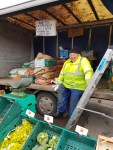
Dave
I try preserving that traditionalist taste for things that are so typical of me. I like old towns, I like handcrafted, homemade, old arts, and town markets. I am invariably an irreparable nostalgic. Since I moved to Whittlesey, I have always looked for local produce. Because the big commercial surfaces have suffocated in unaffordability, and although people keep trying, they don’t tend to stick around for very long. I would love to help these businesses. But how can you compete with the “big dogs”, when they can provide more, cheaper and quicker?
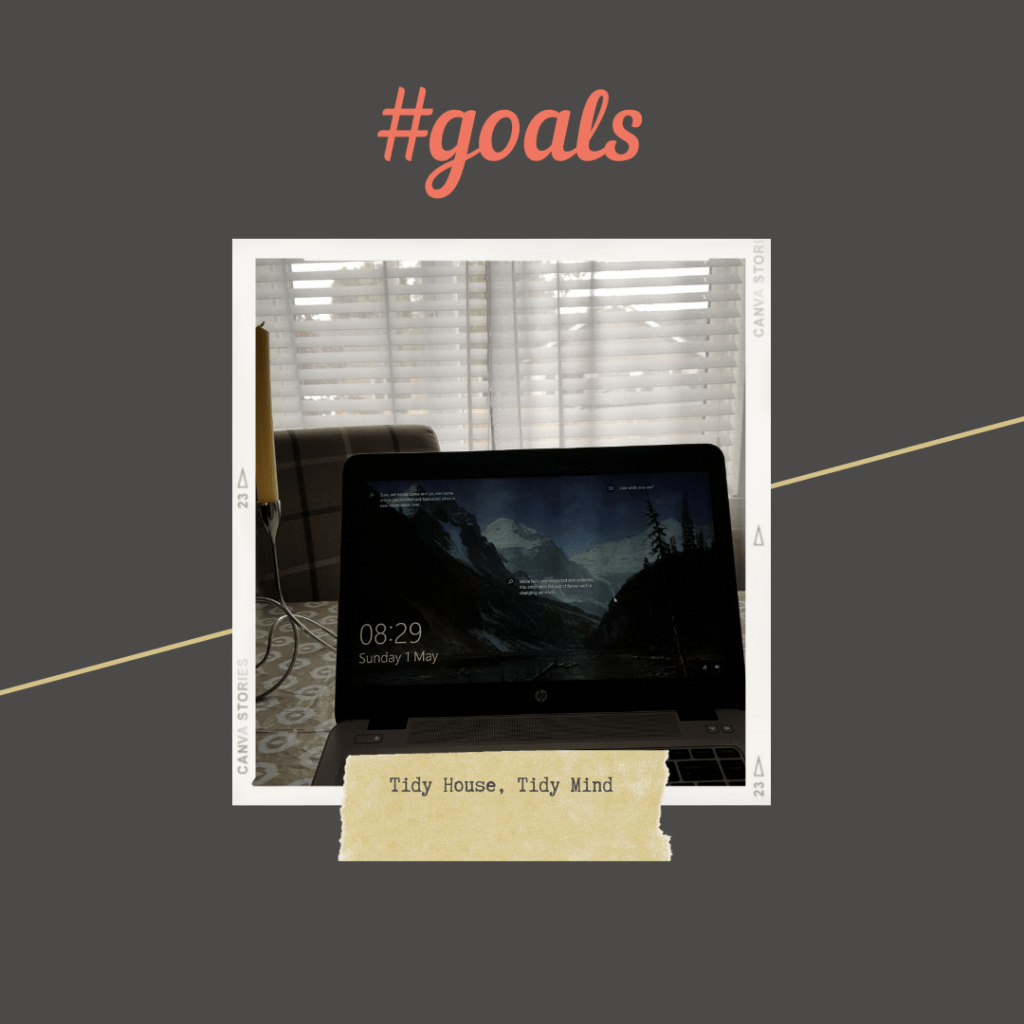
#goals
The easily dismissed art of repurposing content
At times like the one I had this past week, one of the things I still dismiss, while busy dealing with everyday life, was that I have posts from previous blogs from which I can drink from when time gets scarce. There is so much potential in revisiting old posts. I have quite a few that I posted that I took down because either these didn’t have any interest or that I just didn’t publish because I didn’t find it ticked the boxes.
Last week…
If I mind yours
and you run a Dental Practice or Service…
We all go to the dentist at some point in our lives. In fact, going to the dentist for a check-up has become the norm. It is recommended by all dentistry health professionals that we keep our smiles in check, rather than waiting for that nasty pain to get in the way of our schedules.











 Nostalgic Mumma