People Mean Business
“Companies need to nurture their employee’s individual nature for them to feel confident in their role, as it will empower them, hence making them more productive. It works from the inside out.”
Remote Work
In case you missed it…
It has been a while since I scanned through the world of remote/hybrid working, so I’m going to play a little catch-up. Going through the top ones since January was not an easy task. But it gave me a good insight into the remote work trends, and it put it into perspective for me.
Shocking (or not) that someone like Elon Musk, who is in an advantageous position to substantially improve remote working through tech applications has declared to be against it and found it “morally wrong” based on this work format not being available to those more hand-skilled workers. His comments should in fact cause hand-skilled workers indignation, for his clear lack of will to make this format possible for them too. The public comments are quite funny and can often offer added insight to the news articles.
But on to more important things, we are now well aware that remote work is intrinsically related to the growingly trendy mental health topic. It’s about how working from home can be damaging to one’s mental wellbeing. It’s said to bring feelings of isolation, which can lead to an inability to adapt, hindering professional progress. Moreover, when staff is confronted (even forced) to work with such a required high level of independence when it was mostly used to working interactively (and/or relying on others), this can threaten their employment.
This can trigger a sequence of unwanted events: stressing about work, which leads to stress about the job position’s relevance when not achieving or delivering. This will be followed by concerns on how to pay the ever-growing bills cost in the current recession. On the other hand we observe the fear of the temporary loss of turnover from employers, that may come as a result of the required allocated time to workshops and training related to mental health, in an already dreaded remote setting. But the revenue that taking this action brings, in the medium term, could attract, will surely overcome it.
In certain cases, there almost seems to be an avoidance, where some employers hope that if they ignore a problem for long enough it will just go away. But they’re happy to assume their workers are just being lazy when they’re not being as productive as expected, without actually offering any solution. There is no benefit for either employees or employers to not have this support in place. With the information and technology currently available, and with access to all information worldwide and in such depth, the unawareness excuse has become unacceptable.
Although companies are not yet at the ideal mental health empathetic level they could be, their awareness of the matter is growing. This is a very positive shift for all corporate work environments. The same applies to fully remote workers, whether working from the comfort of their home or from the comfort of a nice hotel in some remote paradisiac island. Here’s an article with tips to help nomad freelancers manage their work and life balance whilst still preserving their mental health.
Remote/hybrid work can benefit individuals And if it benefits individuals, it benefits businesses. I can however understand that it doesn’t work for everyone. Either because the work requires it to be office-based, because the individual is not comfortable with working remotely or simply because the required conditions to work from home are not fully met (ie. children and pets, cared ones). This should be a conversation to be had with the employer on a case-by-case basis. It may sound like a time-consuming task but if there are guidelines in place, in partnership with the HR and other relevant Departments this could bring a whole new world of possibilities. What measures is the company willing to put in place to allow this freedom of choice? Perhaps a workshop that covers all areas is in order: mental wellbeing, technology refreshers, expected SLA’s and KPI’s overview, productivity, etc. And acknowledgement: verbally recognising that the employees are also willing to put effort into this will help them not to be left feeling ignored. This is an article from last year, from a company I follow, but I related to the view 100%.
I wouldn’t mind guessing that the people who tend to be more socially active in a physical setting become awkwardly shy in their virtual engagement and the more conservative ones may see remote working as an opportunity to showcase their talents. Companies need to nurture their employee’s individual nature for them to feel confident in their role, as it will empower them, hence making them more productive. It works from the inside out.
What about the extended benefits that remote work brings the business, the higher engagement with other teams, located across the globe? The potential, the opportunity of a wider inclusion and connection with extended teams, how can physical work offer that? Invest in the people and the people will bring business.
My view of remote work sits in the middle. I find hybrid work offers a very reasonable work-life balance for me, for the time being. I like the idea of getting a good amount of autonomy in my work without damage to the physical interaction that the job requires, whilst maintaining a good level of control over my home life. I’m not surprised that many will be willing to take a pay cut or look for another job that grants that freedom if working from home allows a better grip over their life as a whole. And that’s what the Great Resignation was all about.

As a huge defender of hybrid work for corporate jobs, I truly find it the best of both worlds. I have mentioned this in my latest #goals post as well. I disagree with the overlooking or the persistent denial of the productivity potential that it brings to our existence. I strongly feel that much of this has to do with remote/hybrid working. The autonomy it grants us make such a difference in our work-life balance.
Commuting feels like such a waste of time (and money) looking back now. To top that up, my productivity exponentially increased. And alongside the work productivity, is none other than the home life productivity. I have lost count of how many washing loads I have got through, how many lunch packs I prepared, during my commuting time and how many clothes I’ve ironed over my lunch break, which has granted me that much-needed/deserved extra time during the weekend. Quality family time! Quality WRITING time!
Working towards that 100% balance between life and work, where ideally the balance should, in fact, lean more towards LIFE, where the scale weighs 100% work no longer represents a necessary “evil” for the purpose of sustenance (and those life crutches, creature comforts, whatever you want to call it). What we want to achieve is the Minimax principle where we get the maximum of enjoyment or wealth with the minimum effort or pain. The best minus the worse, does that make sense?
On this note, as I love travelling so much and agree wholeheartedly with this article, simple, well articulated and very positive, it is important to cultivate the things that keep us sane and joyful. At least until our social and financial systems reach that peak where work and pleasure intertwine in a such seamless way, that you can’t tell you are working. “Now that’s the way (huh-huh) I like it!“ (Emphasis on the quoting before someone sues me for infringing copyright laws.
Because sharing is caring
On The Knowledge Newsletter:

It is true. I take regular phone calls as an advisor and not only I can tell the caller’s predisposition when they call (i.e. if they’re in a good or moaning mood) but I can also tell the effect my attitude on the phone has in their reaction. I can easily tell that both my posture and attitude have an impact on the reaction of the person at the other end of the phone. We would be being too narrow-minded to think the power of suggestion is only verbal when it can also be transmitted through our non-visible body language.
On TED: Copyright or appropriation
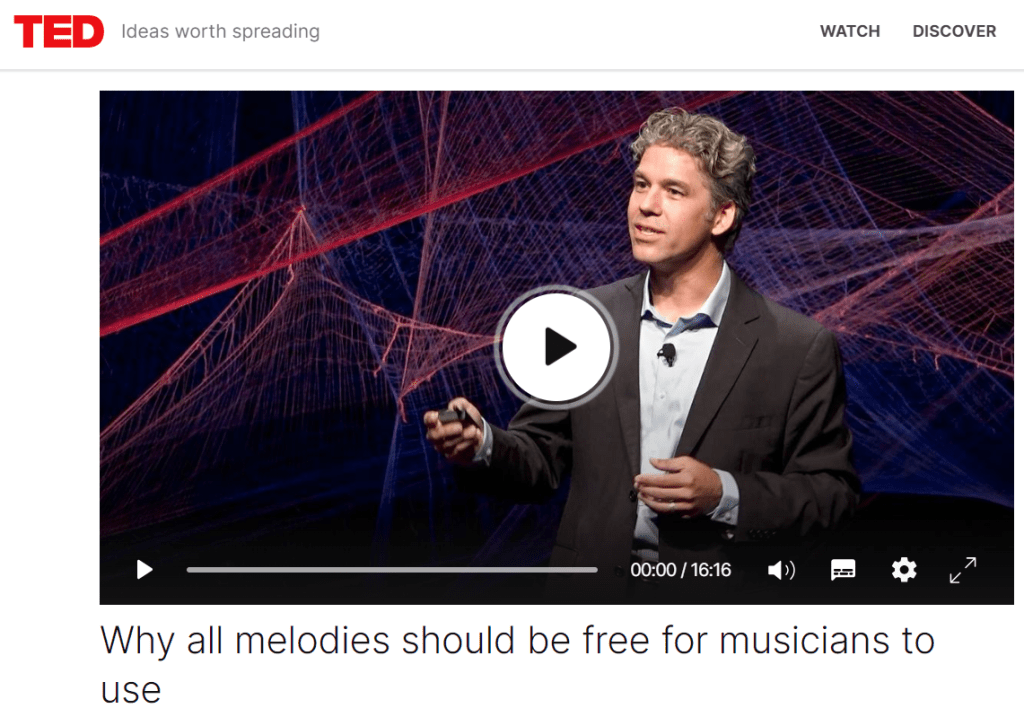
Another great TED talk, by Damien Riehl. Very worth reading. In this day and age, drowned with commercial capitalism, our society is being constantly moulded to suit a specific purpose. It has been consumed by quick money fixes and, by this talk, some resort to more desperate means to achieve a bit of cash. Damien actually makes a very valid point. Have you ever thought that music is actually maths-based? It is based on algorithms meaning that, in reality, all music harmonic (and disharmonic) combinations are limited.
Thinking with Google UK: The current nostalgia trends
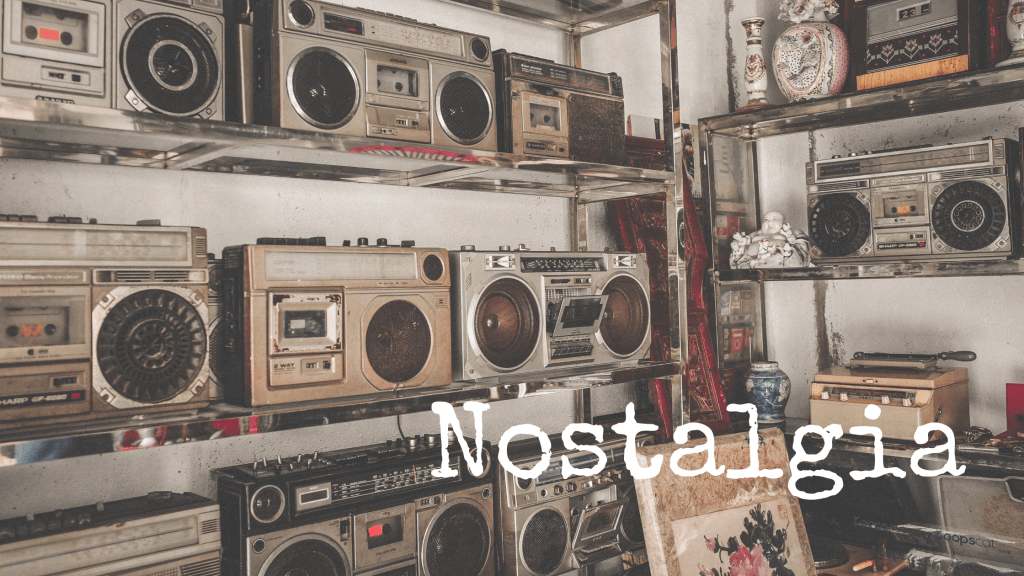
It is so refreshing to see the brands I grew up with making a return. It is inspiring and a great way to create bonds with the new generation, by only revisiting these brands and remember what they meant for us. Where our favourite branded t-shirts were offered to attract more consumers, or as a prize for our regular buys, collecting points of a sort, nowadays this retro fandom has brought a new way to bring new business to old businesses. Now nostalgia has made a comeback on all areas, clothing, music, hairstyle, you name it. To be fair, is only human to want to partake of the atmosphere of the best decades to have ever existed :)

Mind promenade
This blogletter is a work in progress. I am looking for that balance between my availability, my interests. and the reviewing and formatting (when Grammarly doesn’t betray me…).
Life gets very busy very fast and often for long periods. We see life passing us by and our goals still unmet and, obviously we question ourselves. “Oh happiness, goals, personal satisfaction, where are thee?”
A writer’s journey is not one with a deadline, yet that’s what they are loyal to. The writer’s journey is more about themselves than it is to complete the writing task. If they follow their true writing path, they’ll find they’re only trying to understand themselves, continuously looking for a spark.
For someone that leads a busy life, no reading or research feels enough to achieve the goal. It always seems like everything has already been written, all possibilities explored. We live in a world where people’s attention span is getting shorter, where they are more likely to focus on short, noisy, flashy content, such as the hysterical videos my kids sometimes watch. There is no substance to them. 9 out of 10 posts are not true, are not helpful and can have a negative impact on the viewers’ mental well-being. I don’t know when this new generation started valuing superficiality. It is not even entertaining.
For me, reading is a luxury that relies on time. My reading at the moment is mostly limited to practical guidance and self-help. I struggle to set it as a high priority because most days life consumes my energy with mundane but still necessary tasks. “Set time aside for yourself”, they say, “we all need some ME time”. But where do I draw the line between ME time and LIFE time?
And then there’s the social media pressure. If you can’t win them, join them, right? If we don’t engage we’re seen as anti-social. Today there’s no social interaction that doesn’t include a phone. Even if you meet friends for dinner, if they’re not constantly referring to it to post pics or to respond to comments, they’ll get it out just to share gossip or a funny post or video. We end up all getting our phones out because everyone seems to find it more interesting than the physical act of social interaction. It is truly a sad state of affairs… But I diverge.
I still haven’t given up my quest to read more, to write more. Reading is like decoding a secret message, it’s not just reading for reading, it’s about reading between the lines, it’s about my interpretation of what I’m reading. Well, it also depends on what I’m reading, of course. The truth is when you commit to doing it, that spark returns, without you even realising it. All of a sudden there is a little hope that maybe what I’m writing might have some significance, resonate with someone or even entertain. But the most fun part of writing is the game of putting words together with an intention, a meaning. Playing with words can be so interesting, especially if you are working on a topic that you are curious about. I had forgotten that even researching can be fun.
A couple of weeks ago, following submitting a piece of writing to a freelance writing platform, I was invited to complete a trial order. So I set myself the task to spend some time at the local library so that I could focus on research in a more effective way than I would have done, had I stayed home. It would just not be possible. Children and teenagers are demanding little buggers. If one part of me loves them to bits, the other wishes that they grow and move on to more independent lives, and so I can resume mine.
Discover more from Nostalgic Mumma
Subscribe to get the latest posts sent to your email.
 Nostalgic Mumma